

Washington’s Noncompete Law Is Changing Again: What Employers Need to Know
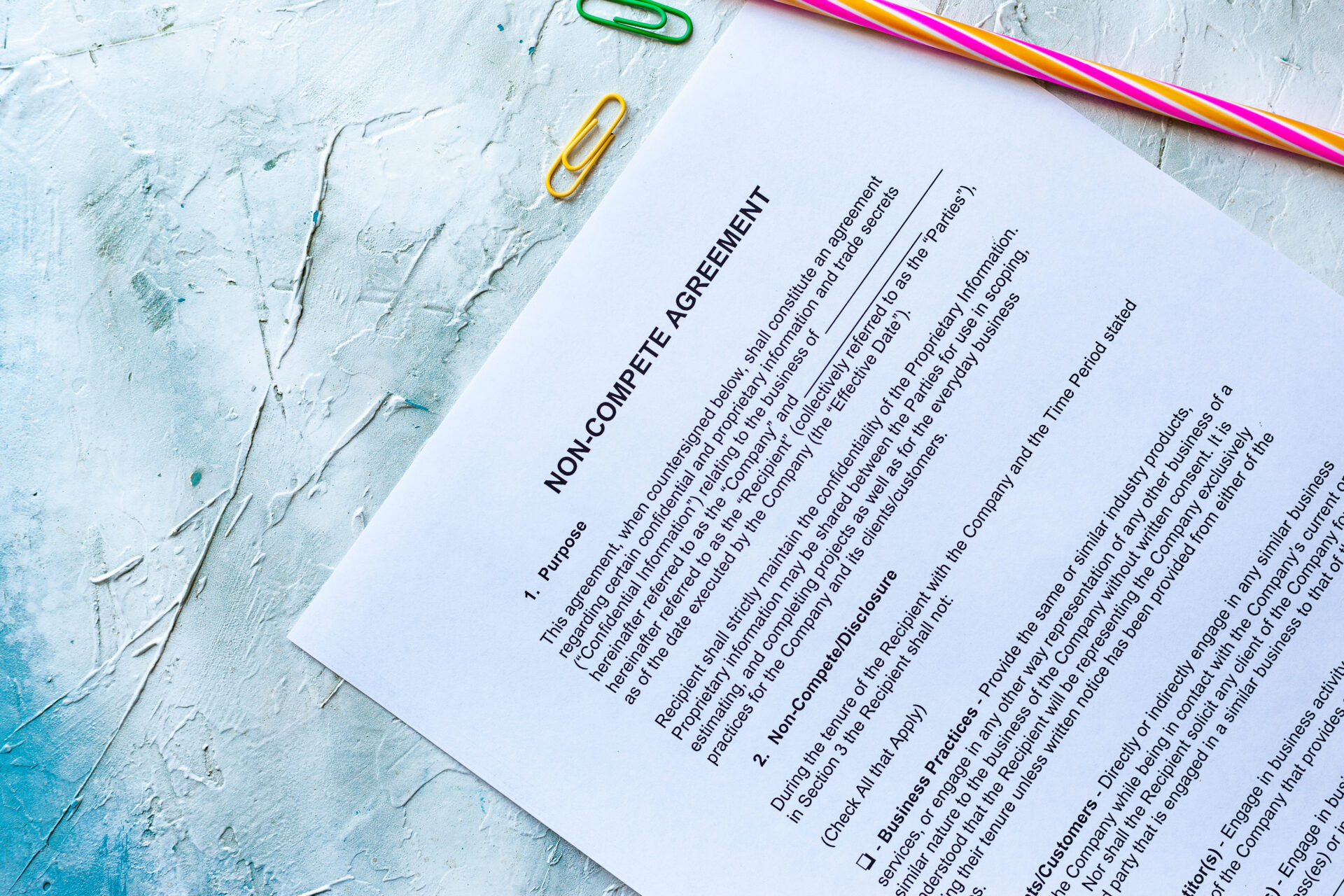
Washington’s legal landscape for noncompetition agreements is changing again. Beginning June 30, 2027, nearly all noncompetition covenants will be void and unenforceable in the state. Washington will join at least four other states in near-total bans of such agreements.
On March 23, 2026, the governor signed Engrossed Substitute House Bill 1155, which became Chapter 149, 2026 Laws. The act amends sections of RCW Chapter 49.62, Washington’s noncompetition covenants law, which was enacted in 2019 and took effect on January 1, 2020.
Under the law that took effect in 2020, as previously amended, noncompetition covenants are banned for workers earning below certain annually adjusted thresholds, and the term of any such permissible agreement is presumptively limited to 18 months. The law broadly applies to all noncompete agreements between an employer and its Washington employees and independent contractors.
The most significant change wrought by HB 1155 is its dictate that beginning on the act’s effective date, June 30, 2027, “all noncompetition covenants are void and unenforceable regardless of when the parties entered into the noncompetition covenant.”
That bears repeating: as of June 30, 2027, all new noncompetition agreements will be banned, and all noncompetition agreements entered before that date will no longer be enforceable from that date forward.
The act also extends its application to retention bonuses or “stay or pay” agreements: it applies to any provision requiring “that an individual return, repay, or forfeit any right, benefit, or compensation, as a consequence of the individual engaging in a lawful profession, trade, or business of any kind.”
A noncompete agreement will be enforceable only if: it’s part of a business sale, and the person signing buys, sells, acquires, or disposes of an ownership interest representing 1% or more of the business; or it’s part of an agreement for out-of-pocket educational expense repayment (a training repayment agreement provision, or “TRAP”) that meets certain criteria.
Furthermore, the act requires that employers, by October 1, 2027, “make reasonable efforts to provide written notice to all current and former employees and independent contractors whose noncompetition covenant is still within its effective time period, that their noncompetition covenant is void and unenforceable.” As under the previous law, a person aggrieved by violation of the law is entitled to bring an action and recover the greater of their actual damages or $5,000, plus their attorneys’ fees and costs.
As amended by HB 1155, the noncompetition covenant law continues to exclude nonsolicitation agreements from the statutory ban but narrows the carveout. To qualify, the restriction must concern a situation where “the employee established or substantially developed a direct relationship with the customer, patient, client, or prospect through the employee’s work for the employer.”
The law also limits nonsolicitation agreements to 18 months after termination of employment. Additionally, the act states that an agreement prohibiting “the acceptance or transaction of business with a customer, patient, or client is not a ‘nonsolicitation agreement’”—clarifying that the act exempts true nonsolicitation agreements only, and not ‘no handling’ agreements.
Employers should begin reviewing employment, independent contractor, and related form agreements that contain noncompetition or nonsolicitation clauses now to determine whether revisions are needed before the June 30, 2027 effective date. Employers should also begin identifying current and former workers who may need notice by October 1, 2027, that their noncompetition covenants are void and unenforceable.
Failure to take reasonable steps to provide that notice by the deadline may expose employers to statutory liability.
Jacob P. Freeman is an experienced litigator recognized for his client-centric advocacy and comprehensive legal analysis. He effectively represents both plaintiffs and defendants in various high-stakes cases in federal and state courts and arbitral proceedings. Skilled in evaluating the intricacies of litigation, he often resolves disputes without formal proceedings, but is fully prepared for court when needed, handling cases from pre-complaint demands to trials and appeals. He can be reached at jfreeman@fennemorelaw.com.