
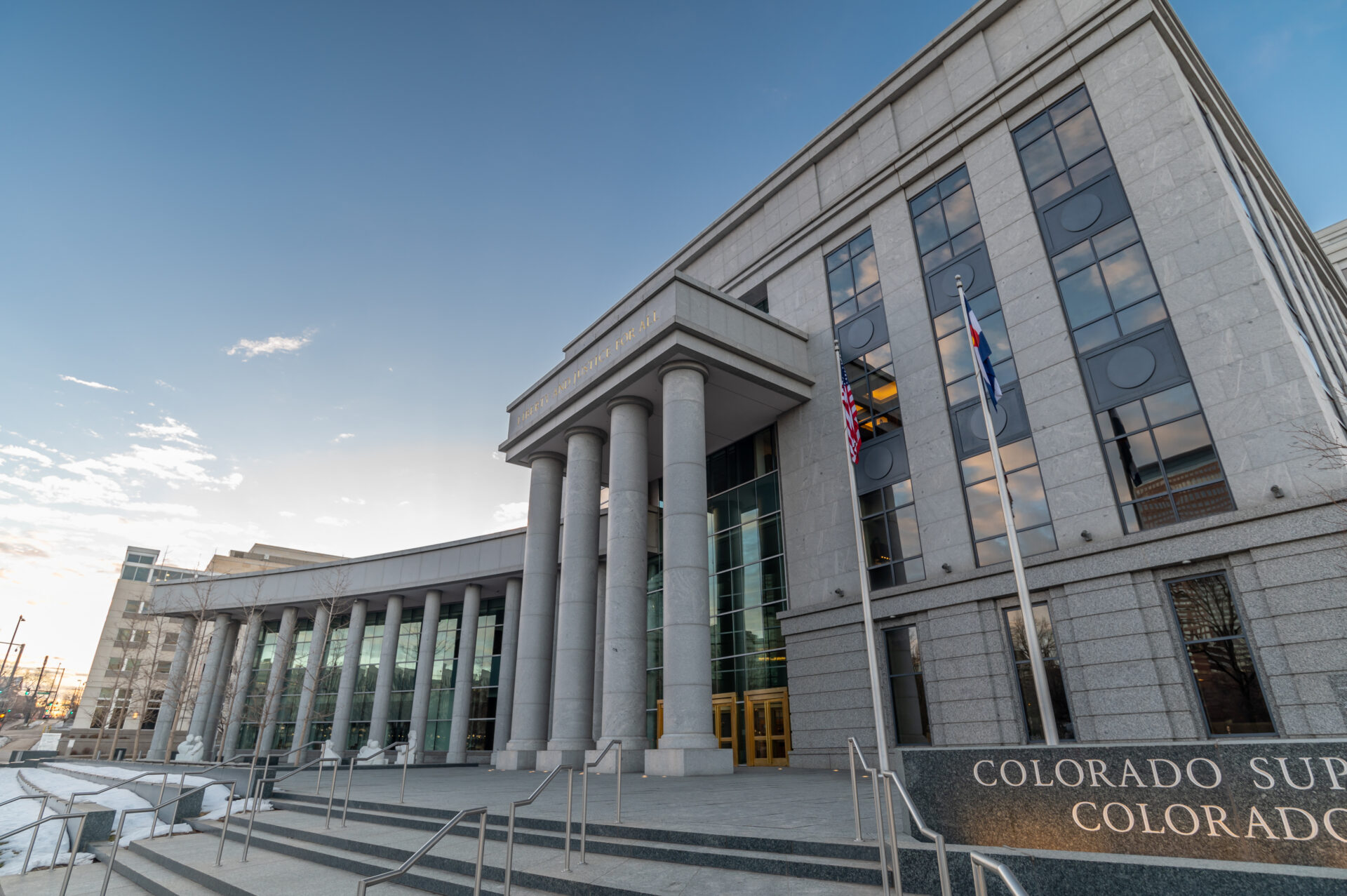

Colorado Supreme Court Clarifies Public Works Claims—Legislature Reinforces the Result
Fennemore is pleased to highlight a significant and favorable development for Colorado’s construction industry. On April 6, 2026, the Colorado Supreme Court issued a landmark decision on Ralph L. Wadsworth Construction Co. v. Regional Rail Partners, clarifying the scope of recoverable claims under the Colorado Public Works Act —bringing long-needed certainty to contractors, subcontractors, and suppliers working on public projects.
The Colorado Public Works Act applies to construction projects involving public works—generally meaning projects owned, funded, or commissioned by a governmental entity, such as state, municipal, or other public infrastructure developments. These projects commonly include roads, bridges, transit systems, schools, and other public facilities.
Fennemore is proud to have played a role in shaping this outcome. Ashley VanTol, an attorney in our Construction practice, co-authored the amicus brief on behalf of the American Subcontractors Association of Colorado and the American Subcontractors Association Attorneys’ Council, advocating for a practical and fair interpretation of the statute.
That position ultimately prevailed before the Court—helping ensure that subcontractors and suppliers are not penalized for asserting good-faith claims in complex, evolving project environments.
Key Takeaways from Wadsworth
The Court confirmed a practical, real-world approach to public works claims:
- Disputed and unliquidated amounts are recoverable
Contractors may include delay, disruption, and other evolving damages in a verified statement of claim, so long as they relate to project labor, materials, or covered costs. - No harsh forfeiture for “excessive” claims
Even if a claim is later deemed excessive, the penalty is limited to statutory remedies under the Act—not a waiver of all legal rights or contract claims.
In doing so, the Court reversed the court of appeals and restored a balanced interpretation that aligns with the realities of complex construction projects.
Legislative Alignment: HB26-074
Importantly, the Colorado legislature has now reinforced the same principles through HB26-074, further solidifying this contractor-friendly framework.
The legislation confirms that:
- Claims may include disputed or unliquidated amounts when asserted in good faith
- Delay, disruption, and lost productivity costs may be included when contractually supported
This rare alignment between the judiciary and legislature provides meaningful clarity and significantly reduces risk for claimants pursuing legitimate payment claims on public projects.
Practical Advice for Construction Professionals
In light of this decision and new legislation, contractors and subcontractors should consider the following best practices when preparing Public Works Act claims:
- Track costs in real time
Maintain detailed, contemporaneous records of labor, materials, equipment usage, and project impacts (especially delays and disruptions). - Segregate and categorize damages
Clearly distinguish between base contract work, change order work, and delay/disruption impacts to strengthen the credibility of your claim. - Document causation and entitlement
Keep records tying delays or disruptions to specific project events, directives, or owner/contractor actions. - Ensure a good-faith basis at filing
Claims do not need to be perfect, but they must be grounded in a reasonable, supportable belief that the amounts are due. - Coordinate legal and project teams early
Early alignment between project management and counsel can help frame claims properly and avoid avoidable disputes over “excessiveness.”
Travis Riley is a Director and trial lawyer in Fennemore’s Construction practice group, representing contractors, subcontractors, suppliers, owners, and developers in complex construction and commercial disputes. He advises clients across the state and in Texas on legal challenges that arise at every phase of a construction project — from contract drafting and negotiation to litigation in state and federal courts. He can be reached at triley@fennemorelaw.com.
Ashley VanTol is an Associate in the firm’s Business Litigation group, where she focuses on civil, commercial, and construction litigation. She represents businesses and individuals in complex disputes and regularly manages cases from pre-litigation strategy through trial and resolution, overseeing motion practice, discovery, and overall litigation strategy. She can be reached at avantol@fennemorelaw.com.